

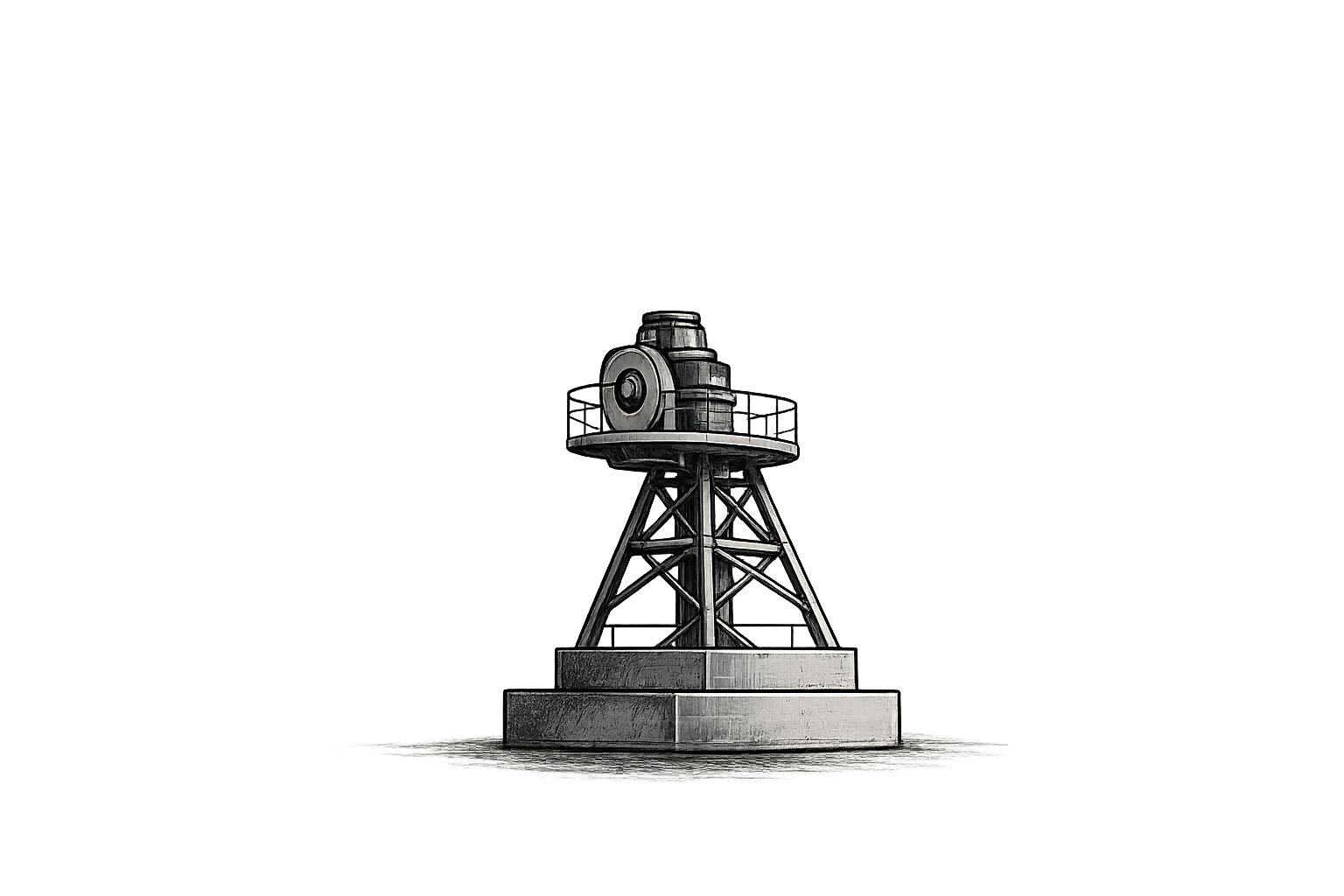

Edge
Network perimeter
- TLS / JA3 / JA4 fingerprint
- HTTP/2 frame timing
- ASN reputation, ISP class
- Tor / VPN / proxy signals
- TCP option ordering
Certification for teams defending production systems from adversarial automation.
CBDP Certified Bot Defense Practitioner
Established
MMXXVI
Public Standard
Modules
09
Canonical Path
Lectures
50
Recorded
Assessments
08
Graded
Last Revised
2026-03-31
Open Specification
The Threat Surface
Production bot defense is a layered pipeline. Each stage produces a verdict that informs the next. The CBDP curriculum walks the entire surface — signal acquisition, fusion, scoring, and edge enforcement — with the same vocabulary your incident reports already use.
Network perimeter
Browser fingerprint
Session telemetry
Edge response
Designed for your team
One curriculum, four lenses. Pick the role you are hiring against — or the one you are hired into — and see exactly what the academy ships for it.
For Defenders
Build the detection lab, ship the playbooks, and rehearse the incidents you will actually face — with the same vocabulary your SOC already uses.

For Offense
Recon, fingerprint, evade, and exfiltrate the way modern bot operators do — inside a lab that mirrors production controls without bringing them down.
For Joint Ops
Run paired offense and defense scenarios, attribute the activity to the right control, and produce coverage maps the whole org can read.
For Agent Builders
Treat your agent like a target. Ship prompt-injection labs, abuse detection, guardrails, and eval harnesses that survive contact with real users.
Competencies
The credential is defined by what the holder can demonstrate — not by what they have read. Three competency axes, twelve graded capabilities, one practical examination.
Capture and interpret signals across the full request stack — from TLS hellos to canvas entropy to keystroke cadence — without contaminating the lab or the truth set.
Combine fingerprint, behavior, and reputation into a fused verdict that survives drift, scales with traffic, and produces decisions reviewable by an auditor.
Translate a verdict into action at the edge — challenge, mitigate, log, block — with full observability, rollback paths, and clear semantics for the SOC.
The Curriculum
The CBDP curriculum is sequenced — each module assumes the prior. Skipping around weakens the practitioner's mental model of the threat surface. Read it as a single text in nine chapters.
Orient the course, establish the lab baseline, and make the first environment decisions before deeper detection and evasion work begins.
Establish the vocabulary and history behind web automation so later defensive decisions are tied to operator incentives and capabilities.
Move from conceptual bot classes into the browser and network signals that make devices and sessions look coherent or suspicious.
Study how automation stacks leak themselves and how challenge systems force headless browsers to prove they are coherent.
Expand from browser-level signals into reputation, routing, infrastructure attribution, and the operational value of network telemetry.
Work from raw interaction traces into behavioral models while keeping explainability and adversarial adaptation in view.
Connect browser trust and bot pressure to API abuse, credential attacks, token replay, and challenge systems.
Take detection logic out of prototypes and place it into CDN, WAF, cache, session, and SOC-adjacent production systems.
End the quarter with a capstone and a publishable artifact set that reflects both engineering rigor and responsible communication.
Labs · Course work
The curriculum is built around lab outputs, not passive reading. Each track turns the lectures into a working detection artifact students can inspect, tune, and defend.
Sections III-IV take students from fingerprint surfaces to headless detection, anti-detect browsers, and JavaScript challenge evasion.
Section V moves from IP reputation into proxy detection, residential classification, ASN/BGP analysis, IPv6, geolocation mismatch, and honeypots.
Section VI turns behavioral telemetry into features, classifiers, model explanations, evasion analysis, and a final behavioral report.
Sections VII-IX connect CAPTCHA, API abuse, replay defense, credential attacks, WAF/CDN integration, SOC observability, tuning, and capstone evidence.
Alignment
The standard does not invent its own taxonomy. CBDP capabilities are explicitly mapped to NIST, OWASP, and MITRE so practitioners can speak the language their auditors, vendors, and SOC peers already use.
CBDP capabilities map directly to the Detect and Respond functions of the NIST CSF, with secondary coverage of Identify (asset visibility) and Govern (risk acceptance for false-positive cost).
Every OWASP Automated Threat in the OAT-001 to OAT-021 catalog is addressed across the curriculum. The examination requires the candidate to identify, classify, and counter at least eight distinct OAT classes from log evidence.
CBDP candidates are taught to read bot operator playbooks through the ATT&CK lens — recognising T1071, T1190, T1210, and the broader Resource Development tactics that make adversarial automation possible at scale.
Examination
Cohort 001 is now reviewing applications. Practitioners with two or more years of production security experience may apply directly. The examination is open-book, scenario-based, and graded by a panel of reviewing practitioners against published rubrics.
Applications are reviewed on a rolling basis. Candidates accepted into Cohort 001 will receive their examination dossier on the published cohort start date.